
- Boeing has upped the production capacity of the 737, the best selling jet airliner in the world.
- Boeing has selected GE as the sole engine supplier for the next generation 777.
Author Archives: admin
Kai Tak Cruise Ship Terminal?
Hong Kong is turning former Kai Tak International Airport into a cruise ship terminal. Kai Tak is Hong Kong’s old airport and was famously dangerous to land at. Just follow this Youtube link to see how dangerous.
Straggling Links…
Some links I’ve had piling up to share for awhile…
- World’s subway routes converging on a natural pattern.
- Satellite imagery of some of the world’s designed cities.
- Visualization of mass transit in major cities across the globe.
- Lockheed Martin is commemorating their 100 year anniversary and they’ve got a nice page up on their role in Air Traffic Control systems throughout the years.
Leave a reply
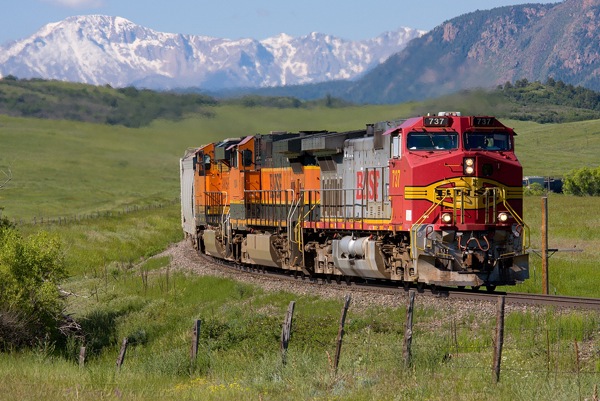
Photo by flickr user AK Ween.
I’m a sucker for the Warbonnet paint scheme and when I saw this photo I just had to share. Capitvating!
ASCE Infrastructure Report Card
ASCE has just released their every-4-year Infrastructure Report Card.
Bottom line :
- America’s Infrastructure GPA: D+
- Estimate for Investment needed by 2020: $3.6 Trillion
The New York Times gives their synopsis.
National Review’s Reihan Salam gives his quick thoughts.
I’m downloading the iPad version now.
Solar Farm at IND
Wow, I hadn’t heard about this.
More than 41,000 solar panels will generate more than 15 million kilowatt hours of electric energy each year, which is enough to power more than 1,400 households.
More FAA Politicking
What a surprise…
Mercedes 2014 Robocar
It looks like the Mercedes 2014 S-Class will be a giant leap toward automated driving. Some amazing features that are just shy of full automation similar to Google’s experiments.
Preventing Another Flight 447-Type Crash
Airbus is working on changing training for pilots to prevent the stall-based type of crash as seen with Air France Flight 447.
With flight simulators unable to accurately replicate the conditions after an aircraft loses lift, or stalls, wholesale changes to training regimes may be required, according to Airbus test pilot Terry Lutz. Other solutions might include giving more control to computers even in the confused conditions under which command currently diverts to the human crew.
The Automotive Future
It seems that, as of late, the automobile has gained a reputation as being a form of transportation we must surpass. The automobile isn’t fuel efficient on a per person basis compared to other modes and therefore tends to get viewed as wasteful. However, the level of freedom that the automobile gives to individuals is unsurpassed by any other form of transportation and for that reason I think future transportation developments will center on the automobile.
Virginia Postrel has a great article on the work being done in Silicon Valley to create “robocars” that drive themselves:
Now it finally seems to be happening. Google Inc.’s self- driving cars have covered more than 300,000 miles, most recently wowing the Texas Transportation Forum with a demonstration on the streets of Austin. “The remarkable thing was that it was a little unremarkable,” Coby Chase, director of the Texas Department of Transportation’s government and public affairs division, told the Dallas Morning News after his ride.
This is the right direction. At least it’s a better direction than pushing cycling, mass transit, and rail. These alternative modes of transportation are fine for some functions but simply do not offer the freedom of mobility that is necessary for people functioning in our economy today.
One comment made in the story by Brad Templeton gives an idea of where Google and others are going with robocars:
Today’s experiments, by contrast, put the smarts in the car itself. “The first rule of robocars is you do not change the infrastructure,” Templeton reminds a Singularity audience member who inquires about smart highways.
I do think that making the cars smart and not the infrastructure is the way to go. However, I also think there are some basic infrastructure improvements that can be made that will allow the robocars to truly optimize their function.
I imagine our automobile transportation system will look very similar to that shown in films like iRobot and Minority Report (coincidentally both Spielberg films). In these films the automobile was controlled by the driver until he ventured into a main thoroughfare/highway that had numerous other automobiles moving at high rates of speed. From there the car took over. The cars, now functioning as robocars on these highways, optimized safety and efficiency and speed was greatly increased. Imagine all the freedom of an automobile in terms of individual autonomy but with a lower risk of accident and shorter travel times… that is where we are going.
Our current interstate highways could easily be retrofitted with inert objects in the lanes, below the pavement, that the robocars would use for guidance. These would be “dumb” improvements but would give the robocars so much more to work with in terms of lane alignment. In addition, we’d have to guard the interstate right-of-ways from incursion far more carefully than we do today.
I think that stop-and-go city driving and residential neighborhood driving offer far too many variables to hand over the car to a computer. A human can identify the “child playing basketball in the yard adjacent to the street” scenario as a reason for caution in a way the computer can not… unless I’m drastically underestimating what the computers can do.