Tag Archives: airport

Responding to Incentives

We should assume that consumers act rationally given the incentives that they face. Repealing the policies that have shaped current behavior such as undervalued public parking, density restrictions, and tax breaks for homeowners will result in people moving closer to their work places and driving less.

Emily Washington at Market Urbanism has a great piece on the long commutes that so many people choose.

I agree with her assumption mentioned above… that is that consumers act rationally based on the incentives in place.

I chose to buy a house and move out amidst the sprawl when I lived in Indianapolis. After getting married and in preparation for having children we bought a house in the suburbs. Government policy favors this decision. Property taxes were lower. Purchasing the house gave us a smaller payment than rent in the city.

After living there for a few years gas prices started rising. My wife drove a Honda Civic, but I drove a 4×4 Toyota truck. I finally broke down and bought another Honda Civic for my commute.

Why? Why didn’t I move closer to my office? Why didn’t I move closer to one of the bus routes? Because the government subsidizes the road infrastructure. Zoning laws promote low-density sprawling suburban developments. Tax law gives an advantage to those who take out a mortgage to buy a home.

I think governmental incentives, and all their unintended consequences, are responsible for the so-called “irrational” decisions made by people when it comes to residences and commutes. Am I silly for thinking that, if governmental incentives are removed, people will naturally move into more dense housing areas that reduce their commute and travel times.
USPS: A Failed Transportation System

A very thorough article in Businessweek on the imminent collapse of the United States Postal Service.

“The postal service is already carrying more junk than first class,” says postal consultant Campbell. “Pretty soon it’s going to be a government-run advertising mail delivery service. Does that make any sense? It doesn’t make any sense.”

“Civilians call it junk mail,” Rice says, joking. “We don’t like that term. We call it job security.”

This just doesn’t seem even remotely tenable.

Every day (except Sunday) the USPS has 10’s of thousands of automobiles driving the same routes regardless of mail volume.

Every day (except Sunday) the USPS delivers reams of paper, in the form of junk mail, that people don’t even want.

This is not sustainable. It’s wasteful from both a economic and an environmental standpoint. This is a classic example of the government’s inability to repair itself, and for that matter it’s inability to diagnose itself.

Intermodal Growth

Interesting article on Reuters regarding the growth of intermodal shipping amongst the railroads. Fuel prices and trucking capacity issues are pushing freight onto the railroads:

“Rising costs on the truckload side because of increasing capacity scarcity, higher fuel prices, highway congestion, the increased (trucking) regulatory environment all help promote conversion from truck to rail,”

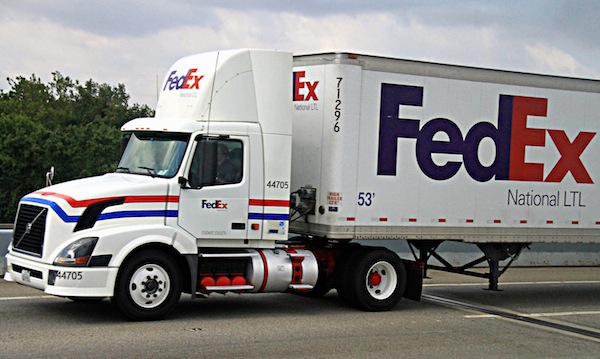
This got me thinking a little bit. Why don’t the railroads view themselves as full-on logistics companies like UPS, FedEx, and DHL? These logistics companies are also shipping companies… but they transport goods from start to finish. All three of these logistics companies operate their own trucking companies, airlines, and distribution centers. They have mastered the transportation of goods.

When it comes to intermodal the railroads do heavy lifting, but what if they tried to offer a service to also cover the “last mile” of shipping? BNSF ships a good amount for UPS, JB Hunt, Xtra Intermodal, etc. and lets them handle the “last mile”. Is there no money to be made off that last mile? What efficiencies could be brought to the transportation of freight if a railroad like BNSF purchased JB Hunt and provided integrated “door-to-door” service?

It seems like Union Pacific almost gets it:

“We see a possible 11 million truckloads of opportunity, meaning 11 million truckloads we could potentially convert from highway to Union Pacific,” spokesman Thomas Lange said.

The railroad recently bought 5,000 shipping containers, boosting its fleet 9 percent,

Why stop there? Don’t just buy shipping containers. Buy the tractors and trailers and finish the job? Provide fully integrated logistics. I’m sure they’ve looked at this. What am I missing?

Politics in Transportation Funding

Yonah Freemark over at The Transport Politic laments the broken funding structure of transportation projects:

But in a country where the vast majority of people drive to fulfill the majority of their transport needs, it would be politically untenable to suggest that most roads money be transferred to transit users.

True. We spend money on gas to fuel our cars. We pay gas tax when we fuel our cars. We expect that tax to better the driving environment for our cars. Pretty simple relationship.

Nonetheless, the American transport funding mechanism is routed in the user fee, a product of a certain logic that assumes that people should pay for what they use.

I disagree here. Our transport funding mechanism isn’t entirely rooted in a user fee… it’s rooted in a gas tax. If it’s a user fee then it’s predicated upon the wrong idea, that the good I’m using is gas. The reality is that I’m using infrastructure. Gas is my fuel, but when I drive from point A to B I’m consuming the infrastructure. I’m placing wear and tear on the infrastructure.

If I buy a Nissan Leaf I suddenly stop paying the gas tax… but I’m still consuming the infrastructure. If Doc Brown installs a “Mr. Fusion” unit in his Delorean he stops paying the gas tax… but he still consumes the infrastructure. That’s why a true user fee is a good idea. The logic “that assumes that people should pay for what they use” is the right logic. It’s just distorted through Disparate Funding Structures (one of our main problems).

Yonah finishes by throwing out two solutions to the funding structure problem:

But a right-headed long-term approach would require that either we pull the national government out of the transport financing game altogether, or that we pull away from the direct connection between highway user fee collections and spending.

I think he’s on the right track when he mentions pulling the national government out of the transport financing “game.” Such an appropriate word there. One of our other main problems, the fact that Politics Trumps Solutions, has turned our transportation funding into a game where the States are unwitting contestants in a sort of Survivor-esque reality show.

Now, how do we go about pulling the national government out of the “game?”

Vehicle Miles Tax

Here’s a great idea with typically poor execution by the politicians. A vehicle miles tax.

The whole approach to this is wrong though. The White House issues a draft reauthorization bill that includes this idea but then promptly disowns the idea publicly. It’s like they are trying to gauge opposition rather than solve a problem.

First of all, if you are going to restructure the funding of road projects, you need to go all the way. Kill the gas tax. It’s not doing the job and, as it is, if we want to reduce gas consumption then gas tax revenue will be shrinking anyway. Remove the gas tax and replace it with a vehicle miles tax.

Secondly, why do we need to accompany this with a proposal for a spooky, big-brother-esque, tracking device in every car? Cars track their own mileage via the odometer. It’s already a Federal offense to tamper with odometers (see Motor Vehicle Cost Information Act, 49 U.S.C. Section 32704). Just require an odometer reading every year with vehicle registration. The States already have the resources in place to collect this information.

You are NEVER going to get people to accept an additional tax to pay for their roads. However, a substitute tax that presents a better funding structure and produces a tangible result (ie. better roads) will probably pan out. The number of miles driven, and thus the amount of demand placed on the infrastructure, will be proportionate to the funds collected.

The best solutions are often the simplest. What am I missing?

Ford Lowering Hybrid Costs

In an all-out effort to lower the cost of their hybrid offerings Ford has in-sourced (is that a word?) nearly all of its hybrid technology. Ford designed its own hybrid battery, which will soon start production in Ford’s Rawsonville, Michigan plant, as well as its own hybrid transmission, to be produced in Detroit.

Software development for the hybrids has also been brought in-house. The results? Costs on Ford’s newest generation of hybrids dropped by a cool 30%…

via Gas 2.0.

Speaking of hybrids, this is promising news. One barrier to hybrid car adoption has been the price premium. Make the price equal and you are on the way to a wider adoption of this technology.

I’m still not convinced hybrid is the endgame for automotive transport, but its certainly a step in the right direction.

Mazda Unveils All-Gasoline Engine?

Their new SkyActiv all-gasoline engine 2.0 liter, 155 horsepower will allow the 2012 Mazda3 to boast a hybrid-esque 40 miles-per-gallon.

via Gas 2.0.

Very interesting. I gotta admit that engines like these sure take the bang out of hybrids. In my opinion, hybrids just aren’t quite there yet. A diesel Jetta can beat out a hybrid… as could my 1987 Honda Civic SI that I purchased very used in 2004. I could pull 42 mpg out of that car.